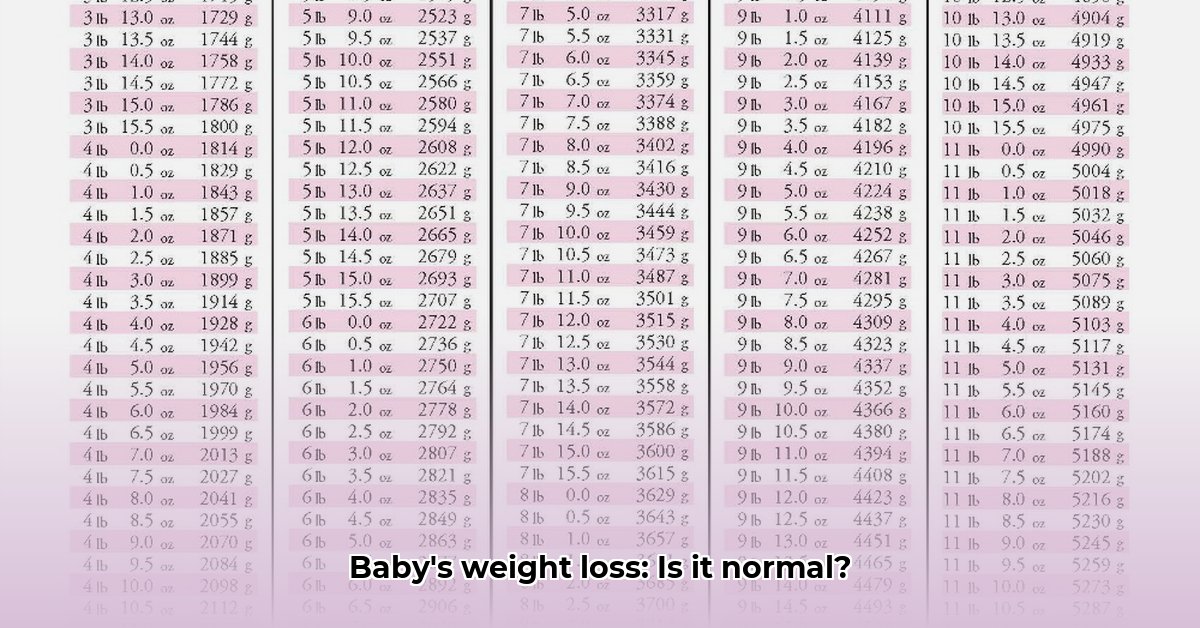
Bringing home a new baby is a joyous occasion, but it also brings a wave of responsibilities and concerns, especially regarding your baby's health. One crucial aspect of neonatal care is monitoring your baby's weight. This guide will demystify neonatal weight loss charts, explain how to interpret them, and outline when you should seek professional assistance. We'll explore both traditional methods and the use of digital tools, empowering you to ensure your baby thrives.
Neonatal Weight Loss Chart: Your Baby's Early Weight Story
Tracking your newborn's weight in the initial days is vital for early detection of potential health issues. Small fluctuations are expected, but understanding normal weight loss patterns and recognizing when intervention is needed is critical. This comprehensive guide will equip you with the knowledge to confidently monitor your baby's weight journey.
Understanding Your Baby's Weight Journey: The Neonatal Weight Loss Chart Explained
A neonatal weight loss chart visually represents your baby's weight changes during their first week of life. Most babies experience a slight weight loss—typically between 5% and 10% of their birth weight—in the first few days. This is often due to the expulsion of excess fluid accumulated in the womb and is usually nothing to be concerned about. However, consistent monitoring is crucial to ensure this weight loss remains within the normal range. Healthy newborns typically regain their birth weight within five to seven days. Deviations from this timeframe warrant consultation with your pediatrician.
Digital Tools: Weighing the Pros and Cons
Several digital tools are available to assist with weight monitoring, often offering convenient tracking and data visualization. These tools can simplify record-keeping and facilitate communication with healthcare providers. However, it is important to acknowledge their limitations. Examples include potential for inaccurate data entry, privacy concerns regarding health data, and the inherent need for reliable internet access.
Advantages of Digital Tools:
- Convenient Tracking: Easy record-keeping and data analysis.
- Visual Representation: Clear visualization of weight trends.
- Streamlined Communication: Facilitates sharing data with your pediatrician.
Disadvantages of Digital Tools:
- Inaccurate Data Entry: Potential for errors in manual input.
- Privacy Concerns: Data security and adherence to regulations such as HIPAA are critical.
- Technological Dependence: Requires access to technology and reliable internet connectivity.
Monitoring Your Baby's Weight: A Step-by-Step Guide
Regularly weighing your baby is an essential part of neonatal care. Following these steps ensures accurate and reliable tracking:
- Gather Supplies: Secure a reliable baby scale, preferably one calibrated regularly.
- Weigh Your Baby: Ensure the scale is on a level surface and carefully place your baby in the center. Take multiple readings and average them for accuracy.
- Record the Weight: Meticulously note the date, time, and weight. Using a dedicated notebook or a digital tracking app simplifies this process.
- Calculate Weight Change (Optional): Many online calculators can help determine percentage weight change. However, always consult your pediatrician for interpretation.
- Consult Your Pediatrician: Regular communication with your pediatrician is paramount. Report any significant weight loss or failure to regain birth weight within the expected timeframe.
Your Pediatrician's Role: A Collaborative Approach
Your pediatrician plays a vital role in interpreting your baby's weight and ensuring their overall health. They'll consider your baby's individual factors, such as feeding patterns and overall health, to provide tailored advice. Open communication is key to ensuring timely intervention if needed.
- Clear Communication: Expect clear explanations and answers to all your questions.
- Personalized Guidance: Your pediatrician's recommendations should be specific to your baby's situation.
- Early Intervention: Your doctor will provide prompt treatment if any problems are detected.
Risks and Mitigation Strategies
While weight monitoring is generally safe, potential risks, such as misinterpretations of data or privacy breaches, need to be acknowledged and mitigated. Adhering to the following safeguards ensures safe and effective monitoring:
- Double-check measurements: Always verify your weight readings to ensure accuracy.
- Prioritize data privacy: Only utilize digital tools from reputable sources that comply with relevant data protection regulations.
- Consult your pediatrician: Regularly discuss your findings with your pediatrician for professional interpretation.
Regulatory Landscape: Data Privacy and Security
Compliance with data privacy regulations, such as HIPAA (Health Insurance Portability and Accountability Act) in the United States and GDPR (General Data Protection Regulation) in Europe, is of utmost importance. All digital tools used should strictly adhere to these regulations to protect your baby’s sensitive health information.
Conclusion: A Partnership in Health
Consistent weight monitoring, coupled with open communication between parents, healthcare professionals, and technology developers, is crucial for optimal neonatal care. This collaborative approach ensures early detection of potential issues and timely intervention, ultimately promoting your baby's healthy growth and development. Remember, trust your instincts and don't hesitate to reach out to your healthcare provider if you have any concerns.